
One distillery, three whiskies: Springbank, Hazelburn and Longrow
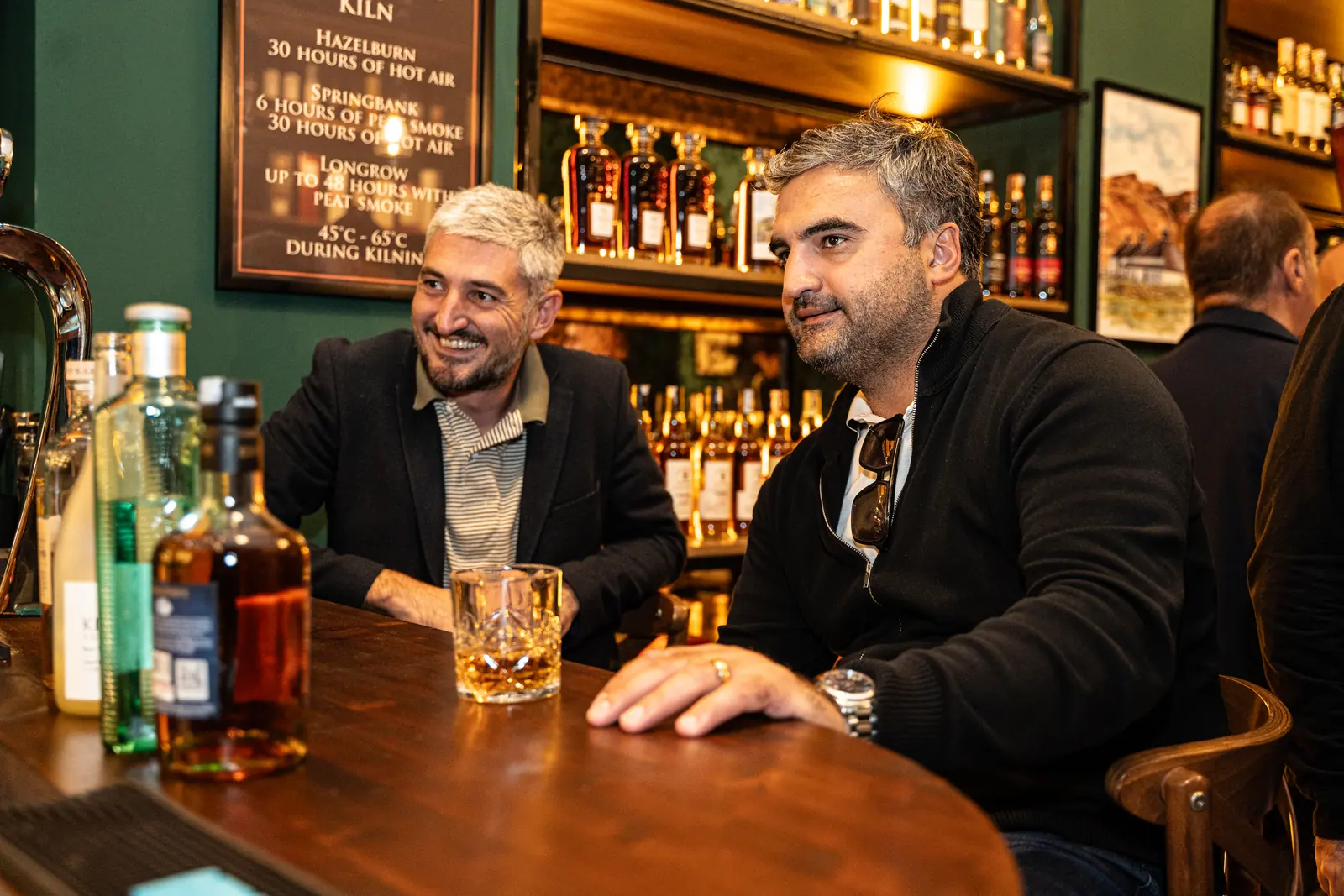
Every dram has a story. This one starts with a sign on our wall.
Look past the bar and you'll find a small board titled Kiln. It lists three names and three ways of drying barley:
- Hazelburn — 30 hours of hot air
- Springbank — 6 hours of peat smoke, then 30 hours of hot air
- Longrow — up to 48 hours with peat smoke
All three come from the same place: Springbank Distillery in Campbeltown, on Scotland's Kintyre peninsula.
Same distillery, different whisky
Springbank has been in the hands of the same family since 1828, and it still malts its own barley on a traditional malting floor. That matters here, because the difference between the three whiskies starts long before the stills.
The kiln. Malted barley is dried before it is milled. Dry it over peat smoke and the smoke stays in the grain, and later in the glass. The longer the smoke, the more of it you taste. Hazelburn gets none. Springbank gets a few hours. Longrow gets the most.
The stills. The distillation is different too:
- Hazelburn is unpeated and distilled three times, which gives the lightest spirit of the three.
- Springbank is lightly peated and distilled two and a half times: part of the spirit goes through the stills a third time.
- Longrow is heavily peated and distilled twice.
Same water, same town, same people. Three different whiskies.
Taste them side by side
The easiest way to understand the difference is to taste it. Our Campbeltown flight pours all three as 20 ml measures:
- Hazelburn 10 Y.O.
- Springbank 10 Y.O.
- Longrow Peated
The flight costs 48 Georgian Lari, the sum of the three pours. Go from lightest to smokiest, Hazelburn first and Longrow last, and add a few drops of water if you like. Nobody is checking how you drink it.
If one of the three wins you over, the shelf goes further: Springbank 5, 12 and 15 Y.O., and Hazelburn 7 Y.O. are all on the menu.
Ask at the bar for the Campbeltown flight, or book a tasting ahead.